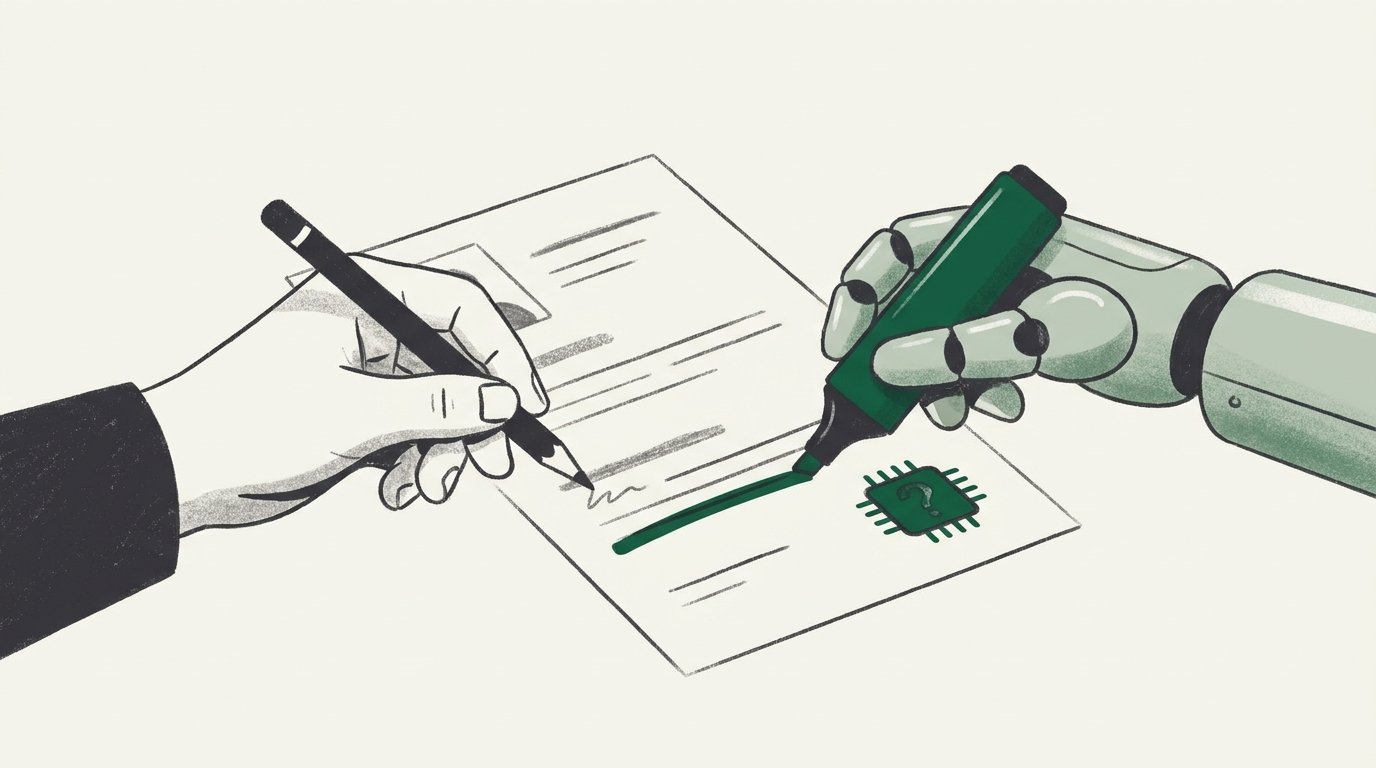
Every free AI resume builder makes the same implicit promise: build your resume here, at no cost, and walk away with a file you can actually send to an employer. The reason this article exists is that the promise frequently breaks at the very last step. You spend an hour entering your work history, accepting suggestions, adjusting a template — and then the download button asks for a credit card. In the industry this is just called conversion. From the chair of a job seeker who may be unemployed and counting dollars, it feels like something less polite.
We build a resume tool with a free tier ourselves, so read this with that bias in mind. But the test we propose is one you can run on any product, including ours, in under fifteen minutes — and we would genuinely encourage you to run it on us first.
The free-tier ambush: why "free" usually ends at the download button
The economics are simple. Resume builders acquire users through search terms like the one that probably brought you here. Free editing costs the vendor little; the resume file you produce is the thing you cannot leave without. So the paywall goes where your commitment peaks: after the work, before the export.
The pattern has variants:
- The hard paywall. Export is simply a paid feature. At least this is unambiguous once you hit it.
- The watermark. You can export free, but the file carries the vendor's branding — unusable for a real application, so it functions as a paywall with extra steps.
- The trial funnel. A small fee (a dollar or two) unlocks export and quietly starts a subscription that renews at full monthly price. The renewal terms are in the fine print; many people discover them on a bank statement.
- The crippled format. Free export exists but only in a format nobody asked for, or at reduced quality, or limited to one template.
None of these are secrets — they are described in each product's terms. But terms are read after frustration, not before effort, and the design counts on that.
Our test: build and export a real resume on every free tier
The test protocol is deliberately boring, and you can replicate every step:
- Create an account with a fresh email. Note what payment information is requested and when.
- Enter one real role with three bullets. Use any AI features the free tier offers.
- Attempt to export a PDF.
- Open the PDF. Check for watermarks, check that text is selectable, and copy-paste the content into a plain text editor to see what a parser would see.
- Read the pricing page and the renewal terms for whatever paid step, if any, was required.
Step 4 matters more than people expect. A visually clean PDF that copy-pastes into garbage will parse into garbage in an applicant tracking system too — which is a separate, quieter way a free export can be worth less than it looks.
What the major free tiers actually include
Specific limits change often enough that we will not pretend to quote exact current feature lists — check each vendor's pricing page on the day you decide. But the general shapes, per product, have been consistent:
- Rezi offers a free tier with core AI writing and ATS-focused features under usage limits, with paid tiers unlocking higher limits and formats. Reasonably transparent about where the line sits.
- Teal has one of the more genuinely usable free tiers in the category: the job tracker and a working resume builder at no cost, with paid features layered on for power users running heavy application volume.
- Kickresume free gets you into the editor and some templates, with much of the design library and AI capacity reserved for paid plans.
- Zety is the clearest example of edit-free, pay-to-download: the builder itself is free to use, and the file at the end is where payment enters, historically via a trial-to-subscription structure. Read the renewal terms before entering a card.
- Jobscan, while a match-scoring tool rather than a builder, follows a similar shape: a limited number of free scans, subscription beyond.
The honest summary: every one of these free tiers is real in the sense that you get something for nothing. They differ enormously in whether that something includes a usable file.
The watermark, lock-in, and subscription-trap patterns to watch for
Beyond the download button, three slower-burning patterns deserve attention:
Watermarks as negotiation. A watermarked export is not a free export; it is an advertisement you are asked to send to employers. Treat any product whose free tier watermarks output as paid-only and evaluate it accordingly.
Content lock-in. Check whether you can get your text back out in an editable form. If the only export is the vendor's format or a paid PDF, your resume content is a hostage. Before investing hours, paste your master content in from a document you keep elsewhere — never draft original material only inside a builder.
The auto-renewing trial. The trial-to-subscription funnel is legal and disclosed, and it still generates a steady stream of complaints from people who missed the disclosure. If a product asks for a card to unlock a "trial," set a calendar reminder to cancel the same day. Better: decide whether you would pay the full monthly price knowingly. If not, do not enter the funnel.
Our free plan, stated plainly
Since we are asking other vendors to be explicit, here is our own line. Workplacea's free plan includes the full editor, the complete published score, the browser-based ATS checker, and every AI writing and tailoring tool. There is no artificial cap on how many resumes or job-specific variants you can create. Three ATS-safe core templates — Standard, Meridian, and Carbon — are included, and your first clean, selectable-text PDF export is free and has no watermark.
Payment begins only when you want premium presentation or repeat clean exports. Pro is $12 per month and includes the full premium template library plus unlimited clean PDF exports. Career Sprint is a one-time $39 purchase for the same export and template access for 90 days, with no automatic renewal. Ending either plan never deletes your resumes or locks you out of your words; you keep access to your content and the free tools. The complete itemized boundary is on the free plan page, and the getting started guide shows the whole flow before you begin.
Hold us to the same test as everyone else: build one role, export, inspect the file. If we ever fail it, we deserve the same paragraph Zety got.
Free alternatives beyond builders: templates and DIY routes
A builder is a convenience, not a requirement, and the fully free route is more viable than the category's marketing suggests:
- A plain document editor. Google Docs and Word both produce clean single-column resumes that parse well. Skip the heavily designed template galleries; the simplest layouts are the safest.
- A chat AI plus a disciplined workflow. The evidence-first method for using AI on your resume works in any free chat tool, and the prompt library gives you tested starting points. You supply the discipline a builder would otherwise supply as guardrails.
- Free parser checks. Whatever you build with, verify the output parses cleanly before sending it. Free checkers exist, including ours.
The trade-off is real: DIY costs attention and gives you no scoring, no structure, and no workflow. But it costs zero dollars with zero asterisks, and for a single job application that may be exactly right. If you later decide a builder earns its keep, the full comparison of AI resume builders covers how the paid products differ once money is on the table.
Frequently asked questions
Is any AI resume builder completely free?
Every major product has a real free tier, but "completely free" depends on what you need. Free tiers differ mainly on three points: whether export is included, whether exports are watermarked, and how much AI usage you get. Test the export path first — it is the step most likely to cost money.
How do I avoid the download-button paywall?
Export a test file before entering your real content. One placeholder job, one bullet, export attempted. Two minutes of testing beats an hour of sunk work, and it immediately reveals watermarks and format restrictions too.
Are free resume builders safe to put my data into?
Read the privacy policy for two things: whether your resume data is sold or shared with recruiters and data partners, and whether you can delete your account and content. Practices vary widely across the category. A resume contains enough personal information to deserve two minutes of diligence.
Is a free tier good enough for a serious job search?
Often, yes. A serious search needs a truthful, well-written, cleanly parsing resume and tailored versions per application. Workplacea's free tools let you do that work, see the complete score, and leave with one clean PDF. Pay only when premium designs or repeated exports would genuinely make the search easier.
Run the fifteen-minute test on us
Start where the risk is zero: paste your current resume into Workplacea's free resume checker — no account, nothing emailed, raw parse and rubric score on screen. If you want to build from there, the free plan in the editor includes your first real, watermark-free PDF; pricing is visible before any later premium or repeat export.