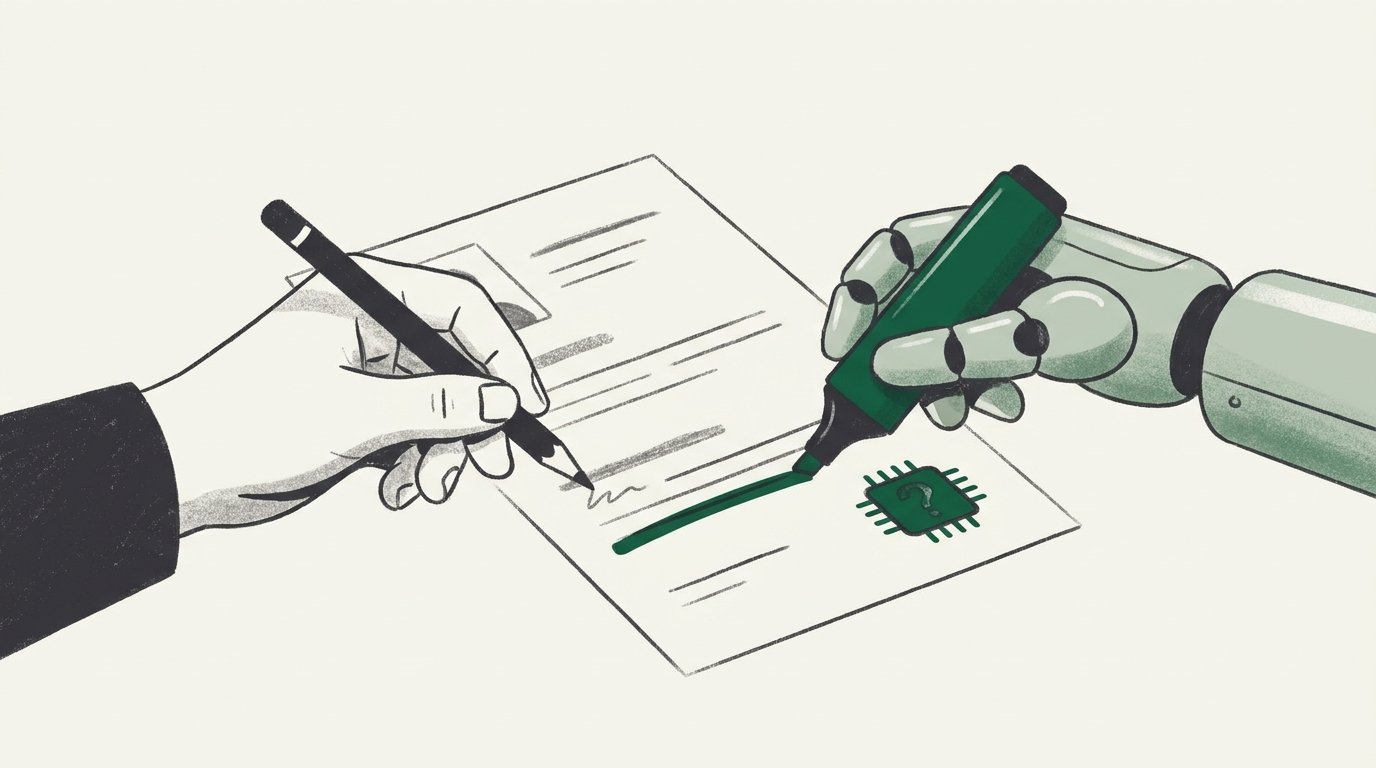
Searching for the best AI resume builder puts you in an awkward position: nearly every comparison you will find is written by one of the builders, and so is this one. We make Workplacea. Rather than pretend otherwise, we are going to do the only thing that makes a vendor-written comparison worth reading — tell you our test method, describe competitors by what they actually do rather than by invented flaws, and name the places where they are better than us.
If you want the one-line summary: the products differ less in AI quality than in philosophy. The real questions are whether the tool shows you what its AI changed, whether it invents things, and whether "free" survives contact with the download button.
Our test method: same career history, every builder
For this comparison we took one mid-career history — a customer success manager with six years of experience, one job change, and a handful of defensible metrics — and ran it through each product's main workflow: import or manual entry, AI-assisted bullet writing, tailoring to a real job posting where the feature existed, and export.
Three caveats you should apply to us and everyone else:
- Products change fast. Pricing, free tiers, and features in this space shift quarter to quarter, so verify current details on each vendor's site before deciding.
- One test history is a sample of one. A tool that fit our test profile awkwardly might fit yours well.
- We are a participant. Weigh our claims about ourselves more skeptically than our claims about others, and test the free tiers yourself — every product here has one.
The comparison criteria
We scored on four axes:
- Output quality — are the AI-generated bullets specific, well-structured, and grounded in what we entered, or padded with plausible filler?
- Honesty of the AI — does the tool invent metrics or skills we never provided? Can you see what it changed?
- Pricing transparency — is the cost clear before you invest an hour of work?
- Export freedom — can you leave with a clean, usable file, and what does that cost?
Builder-by-builder notes
Rezi
Rezi is one of the longest-standing AI-focused resume tools, built tightly around ATS-oriented writing: keyword targeting, resume scoring, and AI generation of bullets and summaries are core features. In our test, generation was fast and the scoring feedback was concrete. The general approach is generation-forward — the AI writes, you review the result in place. If you are disciplined about fact-checking output, it is a capable tool; the workflow itself does not force that discipline.
Teal
Teal comes at the problem from the job-search-management side: it pairs a resume builder with a job tracker, so tailoring happens in the context of specific saved postings. That context is genuinely useful — matching your resume against a posting you have already saved is a natural workflow, and the free tier is workable. The AI assistance is more assist-oriented than full-generation, which we consider a point in its favor.
Kickresume
Kickresume leads with design: a large template library and polished visual output, plus AI writing features. If your field rewards a designed document (and parsing is not a concern for how you will submit it), the templates are a real strength. As with most builders in this class, the AI drafting works from relatively thin input unless you deliberately feed it more, so the truth pass is on you.
Zety
Zety is one of the highest-traffic builders and works as a guided wizard: step-by-step entry with pre-written phrase suggestions per role. This gets a first draft on the page very quickly. The pre-written-content approach is the philosophical opposite of evidence-first writing — the phrases were not written about you — and Zety's pricing has historically been clearer at the end of the flow than the start, so read the checkout screen carefully before you invest time.
Workplacea
Our product is built around one idea: you should see and approve everything the AI does. Every suggestion appears as a redline diff against your original text. The AI is instructed never to invent experience; when a bullet needs a metric you have not supplied, it asks you for the number instead of fabricating one. The free plan includes the full editor, checker, score, and AI tools, plus three core templates and your first clean, watermark-free PDF. Paid plans add the premium designs and unlimited clean PDF exports; they do not remove an artificial resume or variant cap, because there is no such cap. The scoring rubric is published rather than a black box — the free plan details are spelled out here.
Where we fall short today, honestly: our template selection is smaller than Kickresume's, we do not have Teal's integrated job tracker, and the review-every-diff workflow is deliberately slower than one-click generation. If you want a resume in four minutes, competitors will get you there faster. We think the extra fifteen minutes is the point, but that is a philosophy you may not share.
The pricing trap patterns to watch for
Across the category, the same patterns recur, and they are worth checking on any builder — including ours — before you type a single bullet:
- The download-button paywall. Free editing, paid export. You discover the price after an hour of sunk work. Test the export before you build.
- The trial that becomes a subscription. Low-cost trial periods that renew at a much higher monthly rate. Read the renewal terms, not the headline price.
- The watermark. Free exports stamped with branding, making the file unusable for real applications.
- The hostage file. No easy way to get your content out in an editable format if you leave.
Our full breakdown of what each free tier actually includes tests exactly this on every major product.
Which builder fits which job seeker
- You want maximum speed and templates: Kickresume or Zety will get a designed document on the page fastest. Budget real time to fact-check and personalize the AI text afterward.
- You are running a high-volume search and want tracking built in: Teal's tracker-plus-builder combination fits that workflow well.
- You want ATS-focused scoring and generation: Rezi is purpose-built for it.
- You want AI help without ceding control of the truth: that is the job we built Workplacea to do — visible diffs, grounding guardrails, honest free tier.
- You want to spend nothing and own the process: a plain document plus the evidence-first AI workflow in a free chat tool is legitimately fine. Builders buy convenience and structure, not magic.
What "AI-powered" actually means in each product
The marketing label covers at least three different mechanisms, and knowing which you are getting matters more than the label:
- Phrase libraries — pre-written bullets keyed to job titles, sometimes lightly AI-remixed. Fast, generic by design.
- Free generation — a language model drafts from whatever you provide, filling gaps with plausible-sounding content. Quality tracks your input; risk of invention is highest here.
- Grounded editing — the model works only on text and facts you supply, proposing changes for review. Slowest, safest, and the approach we take.
None of these is dishonest by nature. But if a tool generates freely and does not show you what it added, the fact-checking burden lands entirely on you — and invented details are the fastest way an AI resume gives itself away. Whatever builder you choose, run the finished file through a parser check before you send it anywhere; builders are also only one category in the wider AI job search stack worth assembling.
Frequently asked questions
Are AI resume builders worth paying for?
If a paid tier saves you hours across many tailored applications, it can be. But test the free tier first, and be suspicious of any product that hides pricing until export. In Workplacea, the AI, checker, and editor are included for free, as are three core templates and one clean PDF. Paying makes sense when you want premium visual designs or expect to make unlimited clean exports, not because you created "too many" resume versions.
Do these builders produce ATS-safe files?
Most major builders export text-based PDFs that parse acceptably, but template choice matters more than brand — heavy multi-column and graphic-led layouts can degrade parsing in any tool. Verify with a parser test rather than trusting the label; our free checker shows you the raw parse.
Can I just use ChatGPT instead of a resume builder?
Yes, and for many people that is the right call. A builder adds structure, formatting, scoring, and workflow; a chat window plus the prompt library adds control and costs nothing. The failure mode of both is the same: thin input, fabricated output.
Why should we trust a comparison written by a competitor?
Trust it the way you would any vendor content: as a structured starting point, not a verdict. Everything we claimed about competitors is checkable on their own sites in ten minutes, and everything we claimed about ourselves is testable on our free plan without a card.
Try the claims, not the marketing
The fastest way to evaluate any builder — ours included — is to put a real resume through it. Upload yours to Workplacea's free resume checker to see the parse and the published rubric score, and if the redline approach sounds like how you want to work with AI, the editor is free to try end to end.