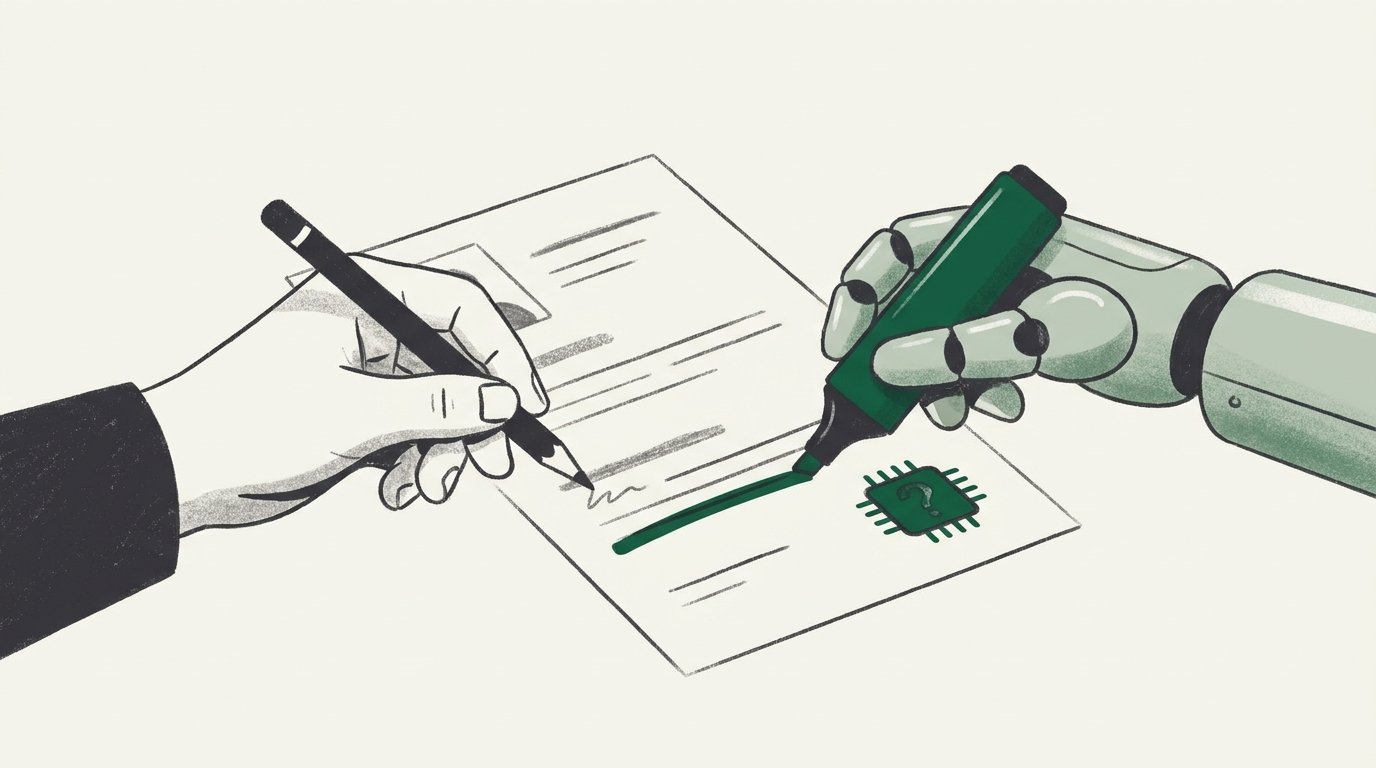
The market for ai job search tools has gone from a niche to a flood in about three years, and the flood has a signature: every product, whatever it actually does, now describes itself as an AI copilot for your career. Underneath the identical marketing sit tools with wildly different value — a few that genuinely compress hours of work into minutes, a large middle that repackages a chat window with a subscription fee, and a bottom tier that actively damages your search while charging you for it. We spent time across the whole landscape; here is the sorting.
A framing note before the list: our consistent finding is that AI tools help most where you bring the substance and the tool brings speed, and hurt most where the tool replaces your judgment entirely. That will be the recurring test below — the same drafting-partner-not-ghostwriter principle that anchors using AI to write a resume, applied category by category.
The 2026 tool landscape, mapped by job-search stage
It helps to sort the noise by where each category sits in your pipeline:
- Discovery — AI-enhanced job boards, matching engines, alert tools
- Application materials — resume builders, cover letter generators, tailoring tools
- Application mechanics — auto-apply services, form fillers
- Pipeline management — trackers, follow-up assistants
- Interview — mock interview bots, question predictors, prep tools
- Negotiation and research — salary data tools, company research assistants
Categories 2, 4, and 5 are the mature, genuinely useful ones. Category 3 is where the trouble lives. The rest are situational.
Resume and cover letter tools: the mature category
This is the most crowded and most functional corner of the market. The major builders — Rezi, Teal, Kickresume, Zety, ours — all work, in the sense that they produce structured, decent-looking documents faster than starting from a blank page. The real differences are philosophical: whether the AI generates freely or edits your evidence, whether you can see what it changed, and whether the free tier survives the download button. We have covered the head-to-head in the honest comparison of AI resume builders, including where our own product loses.
Adjacent to builders sit match-scoring tools like Jobscan, which compare your resume against a posting and score the overlap — useful as a checklist generator, misleading if you treat the score as a verdict, since keyword overlap is a proxy for relevance rather than relevance itself.
Worth using? Yes, with the standing caveat of the category: any tool that writes claims for you needs a truth audit before anything it drafted goes out.
Auto-apply tools: our test results and the spam problem
The pitch is seductive — AI applies to hundreds of jobs while you sleep. The reality we found when testing this category was consistently the weakest of any on this page:
- Targeting is shallow. The matching that decides where your resume goes is keyword-level, so applications land at jobs you would never have chosen, in locations and salary bands you excluded.
- Answers get invented. Application forms ask questions — years of experience, willingness to relocate, visa status. Auto-fillers answer them, and when they guess wrong you have formally submitted false information, which is a genuine problem if the process advances.
- Volume is not the constraint. Mass, untailored applications convert notoriously badly. Recruiters on the receiving end increasingly describe AI-spam application floods, and some now weight signals of individual effort more heavily in response. Automating the spam puts you on the wrong side of that shift.
There is a defensible narrow use: services that only auto-fill the repetitive form fields (name, history, education) while you control targeting and review every submission. Full autopilot, in our testing, is paying to make your search worse.
Worth using? Form-filling assistance, cautiously. Fire-and-forget mass application, no.
AI interview prep tools: mock interviews graded
A quietly excellent category. Language models turn out to be well suited to interview rehearsal: they can role-play an interviewer for a specific posting, generate plausible follow-up questions, and critique the structure of your answers — and unlike a friend, they are available at midnight and never get bored on rep eight.
The spread within the category: dedicated tools add voice interfaces, pacing and filler-word feedback, and question banks per role; a plain chat window with a good prompt gets you a surprising fraction of the value free. What no tool simulates well is the pressure of a real human's raised eyebrow — treat AI reps as volume training and keep one live mock with a person if you can. Full prompts, schedules, and the tools-versus-chat-window comparison are in our AI interview prep guide.
Worth using? Yes — one of the highest-value uses of AI in the whole search.
Trackers and copilots: which earn a place in your workflow
Application tracking is unglamorous and decisive: once you pass ten or fifteen active applications, memory fails, follow-ups slip, and you walk into calls having forgotten which resume version a company saw. Dedicated trackers (Teal's is the best known in the job-search space) organize postings, materials, statuses, and dates, with AI layered on for matching and reminders. A spreadsheet does most of the same job with more friction, and our job application tracker guide covers both routes with templates.
The broader "career copilot" products — all-in-one suites promising to manage the entire search — earn their place only if you actually live in them daily. An unused copilot is a subscription with a dashboard.
Worth using? A tracker, absolutely, in whatever form you will really maintain. Suites, only if the pieces you would use anyway happen to live in one.
The stack we'd actually run: free-first recommendations
If we were job hunting today, the stack is smaller than the market implies:
- One grounded resume workflow — a builder with visible edits or a chat AI plus the prompt discipline, plus a parser check before anything ships
- One tracker — dedicated tool or a spreadsheet, updated the moment anything happens
- One mock interview setup — a prompted chat session per real interview, voice where possible
- Standard job boards with alerts — AI matching layers are a convenience, not a strategy
Total required spend: zero, until a specific limit in a specific tool is costing you real time. That is the honest answer a tools roundup rarely gives — the binding constraint in most searches is the quality of your evidence and targeting, which no subscription fixes.
Tools to avoid: dark patterns and resume-data resellers
Independent of category, walk away from any product showing these behaviors:
- The invisible paywall — free until your work is trapped inside; the free-tier teardown documents this pattern across builders.
- Resume-data resale — services whose privacy policies permit selling or sharing your resume with "partners." Your work history is valuable data; some free tools are free because you are the product. Read the policy's sharing section before uploading.
- Guaranteed-results marketing — no legitimate tool can promise interviews or offers; the ones that do are selling hope at a monthly rate.
- Invented credentials on your behalf — any tool that adds skills, metrics, or experience you did not provide is manufacturing the exact mistakes that sink AI-assisted candidates. This is disqualifying no matter how good the output looks.
- Detector-evasion services — "humanizers" that promise to make AI text undetectable solve a problem you should not have; if your materials are true and edited into your voice, there is nothing to evade.
Frequently asked questions
Do AI job search tools actually improve results?
The honest answer: no tool changes what you have done in your career, and there is no trustworthy universal statistic on interview-rate lift. What good tools demonstrably change is throughput and quality floor — more tailored applications per hour, fewer sloppy errors, better-rehearsed interviews. Whether that converts depends on targeting and the underlying evidence.
Should I pay for an all-in-one platform or assemble free pieces?
Start free and assemble; upgrade the single piece whose limits you are actually hitting. Paying up front for a suite optimizes for the vendor's retention, not your search. Most searches need one builder, one tracker, and one prep routine — each available free at usable quality.
Are AI matching and job-alert tools reliable?
They are decent breadth generators — surfacing postings you would have missed — and mediocre judges of fit, since they match on surface features. Treat matches as leads to evaluate, never as a queue to auto-apply into.
How do I check what a tool does with my resume data?
Search the privacy policy for "share," "partners," "sell," and "retain." You want plain statements that your content is not sold or fed to recruiter databases, and a working account-deletion path. If the policy is evasive on any of these, assume the worst; the tool category has both good and bad actors.
Build the stack around your evidence
Whatever tools you assemble, the resume in the middle of them should be one where every claim is yours. Workplacea keeps it that way — AI suggestions as visible redlines, missing metrics asked for rather than invented, and a free tier that ends in a real export. Test your current resume in the free resume checker, or start building in the editor.